Jambiani tides explained: when you can swim, what low tide reveals, how spring and neap tides work, and how to plan each day in Zanzibar around the sea.
BZBy Bamboo Zanzibar Team · 10 min read
If you stay in Jambiani, the tide will decide more about your day than the weather. Twice a day the Indian Ocean fills the lagoon right up to the sand, and twice a day it drains away, sometimes so far that the water is barely visible from the beach. Neither state is better than the other. They are two different places, and the trick is knowing which one you’ll find when you step outside.
This guide explains how the Jambiani tides work on Zanzibar’s south-east coast, what each stage of the tide is good for, and how to plan a stay so the water works for you rather than against you. It’s written with input from the Guest Relations team at Bamboo Zanzibar, on the beach at Jambiani.
In this guide
The Short Version
There are two high tides and two low tides roughly every 24 hours.
Tide times move later each day, on average by about 50 minutes, so the beach looks different at breakfast on Monday than on Thursday.
Around full moon and new moon the tides are biggest (spring tides): higher highs and much lower lows.
Around the half moons the tides are smallest (neap tides): the water moves less and stays closer to shore.
Swim around high tide. Walk and explore around low tide. Use the pool in between.
Why the Jambiani Tides Matter So Much
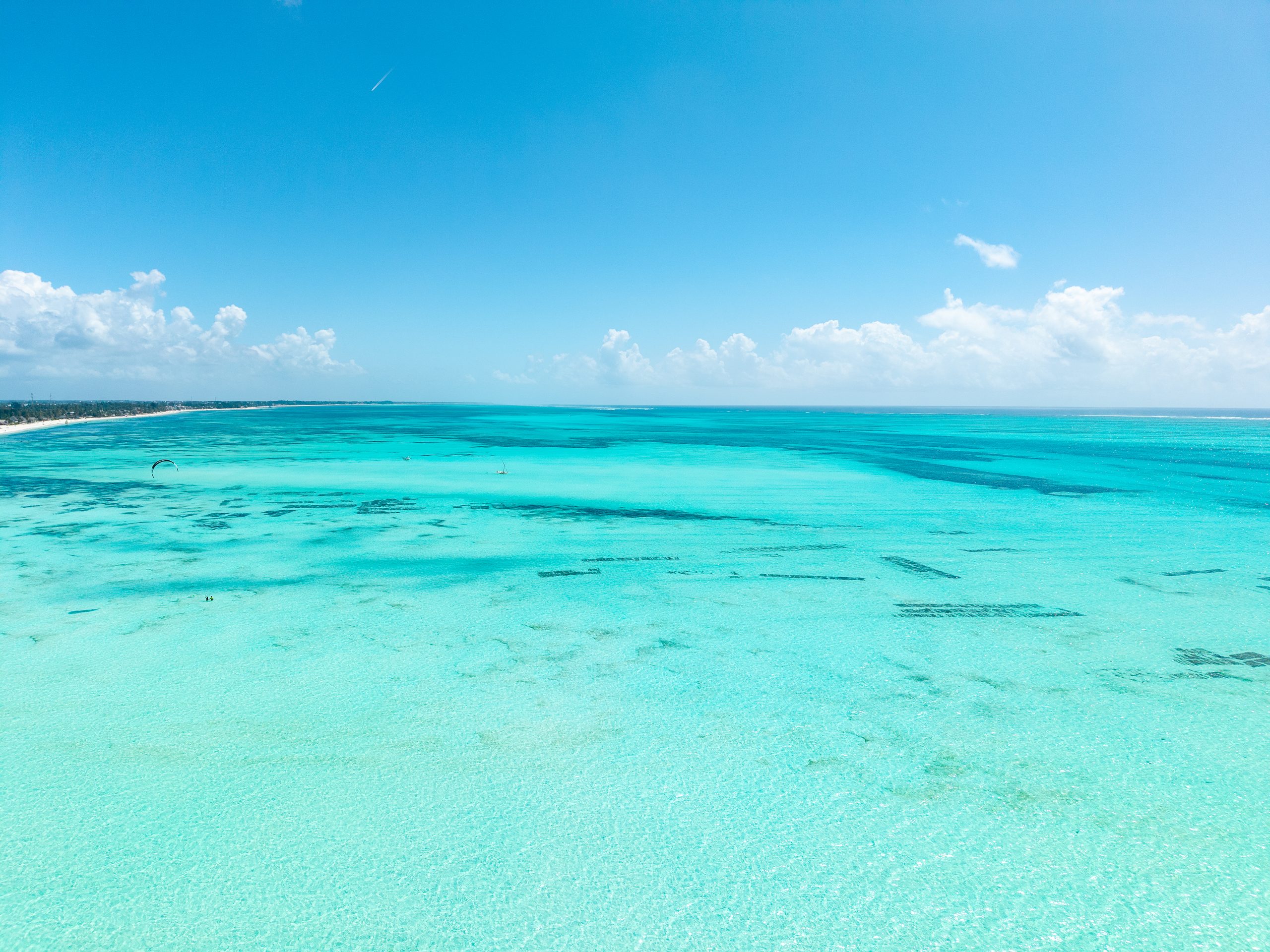
Jambiani sits behind a wide, shallow lagoon protected by a coral reef further offshore. Because the sea floor is so flat, a fall of a few metres in water level uncovers a huge area of sand, seagrass and rock. On the biggest tides the waterline can move several hundred metres.
Tide predictions for Jambiani show how large the difference can be. In a typical month, spring tides can move the water level by roughly three to four metres between high and low, while neap tides may move it by only around one metre (tide predictions for Jambiani). Those few metres are what turn a swimming lagoon into a walkable sand flat.
That’s also why the east coast feels so different from Nungwi and Kendwa in the north, where deeper water close to shore means swimming is possible for more of the day.
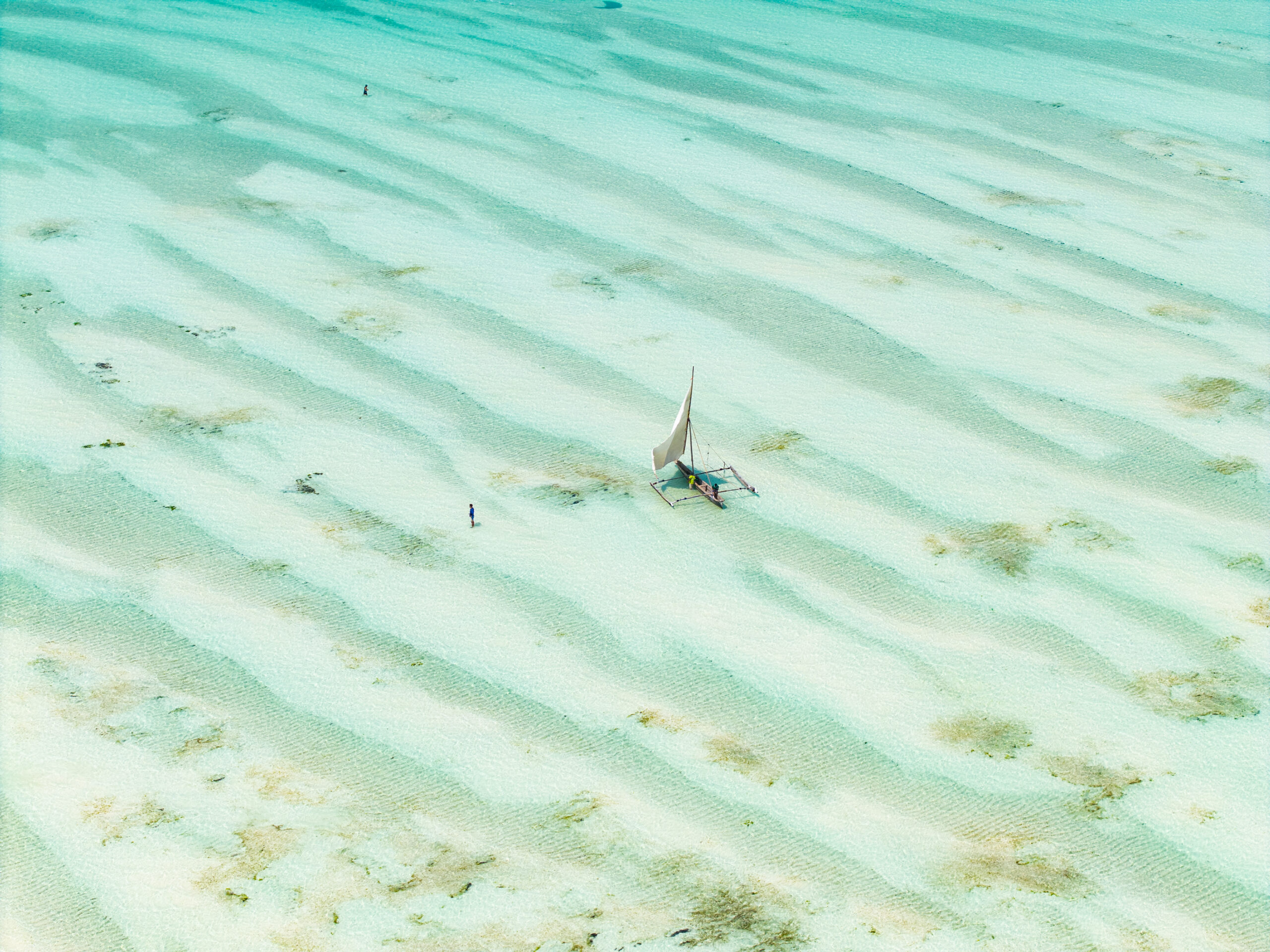
At low tide the lagoon in Jambiani becomes shallow enough to walk across, and the ngalawa boats wait for the water to return
High Tide: Time for the Water
Around high tide the lagoon fills and the water comes right up to the beach. This is when Jambiani looks most like the postcard: turquoise water, gentle waves and boats floating in front of the village.
Good for:
swimming straight from the beach;
kayaking or paddleboarding in calm conditions;
boat trips and sailing, which usually leave and return around high water;
snorkelling trips to the outer reef, when an operator times the departure with the tide.
Swimming in Front of Bamboo
Bamboo sits at Mfumbwi, on the southern stretch of Jambiani, facing east across the lagoon towards the reef. As elsewhere in the village, the best swimming is in the few hours around high tide, roughly two hours before and two hours after. When the tide is in, an early swim as the sun comes up over the ocean is one of the best ways to start the day.
On neap tides the swimming window is longer. On spring tides, around full moon and new moon, it is shorter: the sea can drain several hundred metres out across the lagoon, leaving seagrass, reef flat and seaweed farms exposed.
A few things worth knowing about the water in front of the hotel:
The lagoon floor is a mix of sand, seagrass and rock. Water shoes, which the hotel provides, make walking in and out more comfortable, especially as the tide drops, and protect your feet from sea urchins on the reef flat.
The lagoon is also a workplace. As the water goes out, women from the village tend the seaweed farms. Swim and walk around the lines rather than through them.
When the sea is out, there is still water nearby. The beach lounge has a tidal plunge pool, and the infinity pool looks out over the lagoon, so a low-tide afternoon doesn’t mean a dry one.
Ask the team. The best place and time to swim changes with the tide, the moon and the season. Our Guest Relations team checks the conditions every day and can tell you where and when to get in the water during your stay, so just ask at reception.
Low Tide: Time to Explore
When the tide goes out, the lagoon becomes a landscape you can walk across. Sandbanks, tidal pools and seagrass meadows appear, and the seaweed farming lines worked mostly by local women become visible across the flats.
Good for:
long walks across the sand flats, early or late in the day;
looking at life in the tidal pools (without touching or lifting anything);
seeing how seaweed is farmed, ideally with a local guide;
photography, especially when the light is low.
Before you walk out:
Wear something on your feet. Sea urchins, sharp coral rubble and shells are common on the flats.
Don’t walk on living coral or seagrass, and never pick up shells, starfish or other marine life.
Watch the clock. The water comes back faster than most people expect, especially on spring tides. Turn back well before the tide turns.
Respect the seaweed farms. They’re people’s livelihoods. Walk around the lines and ask before taking photographs.
Ask the team before you head out. How far you can safely walk changes with the tide, the moon and the season. Our Guest Relations team can suggest the best time and route for a low-tide walk. The hotel provides reef shoes, and you can also buy your own at the Bamboo boutique.
Mid-Tide: The In-Between Hours
As the tide rises or falls, the water is often too shallow to swim comfortably but too deep to walk far. This is the time for everything that doesn’t depend on the sea: a long lunch, a massage, a nap in the shade, or a swim in the pool.
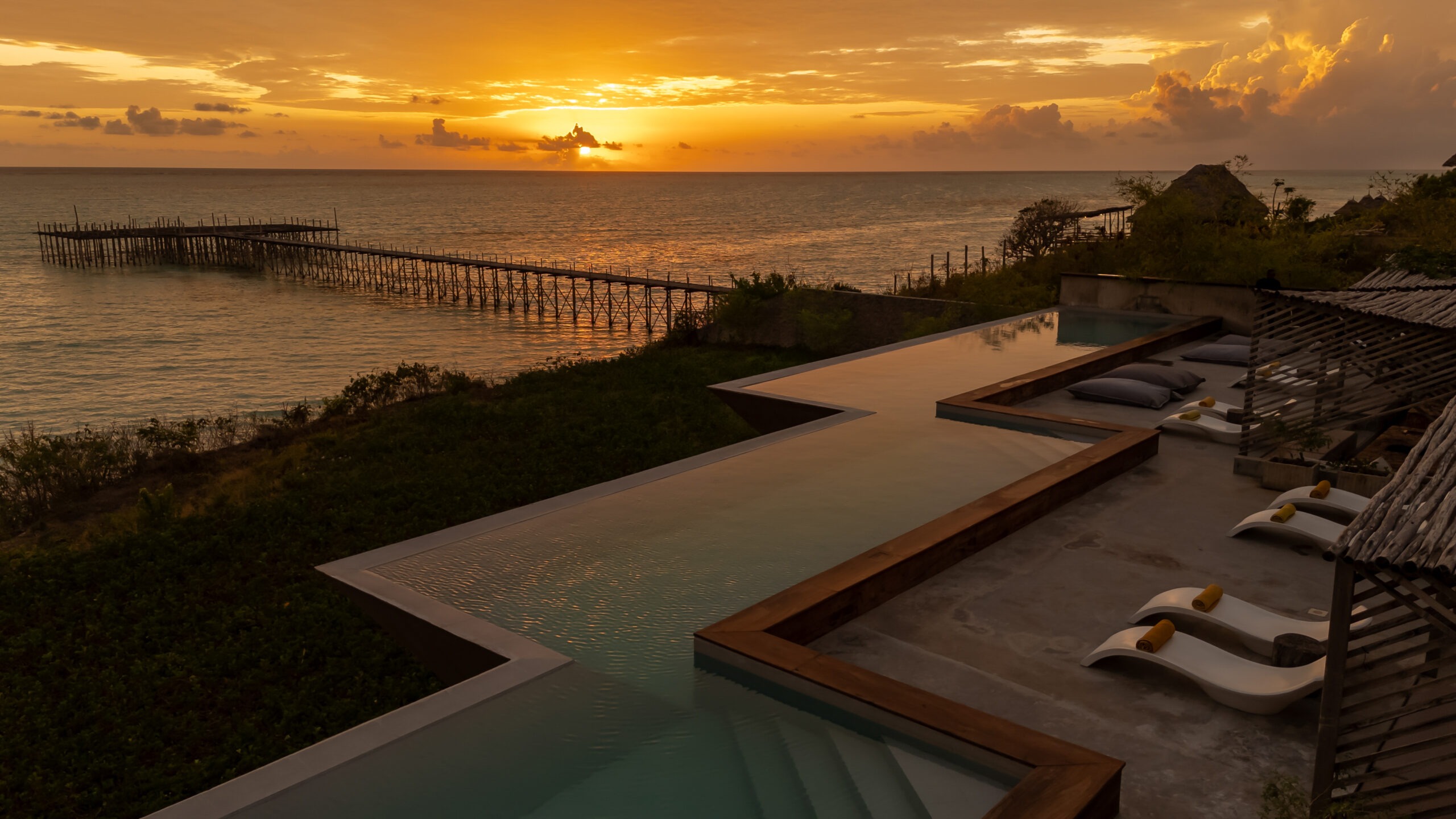
At Bamboo, the infinity pool overlooks the ocean, and the beach lounge has a tidal plunge pool, so there’s water to enjoy whatever the lagoon is doing.
Dramatic low-tide walks and photos, short swim windows
Longer swimming windows, more predictable days
Neither is better. Spring tides give you the most dramatic landscape; neap tides give you more time in the water. If swimming from the beach is very important to you, you may want to check the moon phase for your dates before booking.
How to Plan Your Days Around the Tide
The simplest approach is to check the tide each evening and plan the next day around it.
When high tide falls in the morning: swim before breakfast or mid-morning, take a boat trip if one is planned, then spend the afternoon at the pool, the spa or exploring inland. Walk the flats late in the afternoon as the water goes out.
When high tide falls in the afternoon: walk the beach early while the tide is low and the light is soft, enjoy a slow breakfast and a spa treatment, then swim in the afternoon and watch the water come in before sunset.
For excursions: book trips such as Jozani Forest or a visit to Stone Town on days when the tide is low in the middle of the day. You won’t miss the best swimming hours.
Over a stay of four or five nights, tide times will shift by several hours, so you’ll see the coast at different times of day without trying. That’s one of the reasons we recommend at least that long on this coast.
Ask at reception. Exact tide times are available at reception, and our Guest Relations team will keep you informed throughout your stay, so you can plan swims, walks and trips around them.
Where to Find Tide Times
Tide tables for Jambiani are published online and in several weather apps. Search for “Jambiani tide times” or use the times for Paje, which are very similar. Treat them as a guide: wind, swell and atmospheric pressure can shift the real tide slightly. The most reliable source is local knowledge, so ask your hotel or guide each day.
Is the Tide a Reason Not to Choose Jambiani?
Only if you want deep water right in front of the beach at every hour of the day. For many travellers the tide is the best thing about this coast: it gives the day a rhythm, turns a beach into two very different landscapes and makes the hours between swims feel less like waiting and more like part of the stay.
If you’d like to know more about the village itself, read our Jambiani travel guide. If you’re still choosing a base on the east coast, our comparison of Jambiani and Paje is coming soon.
Planning a Stay at Bamboo Zanzibar
Bamboo Zanzibar is on the beach at Mfumbwi, in Jambiani, with an infinity pool, a beach lounge and a spa for the hours when the sea is out. The Guest Relations team plans boat trips and other experiences around the tide.
Travelling soon?Ask our team what the tides will be doing on your dates, and we’ll help you plan the days around them.
Frequently Asked Questions
Can you swim in Jambiani at low tide?
Usually not from the beach. At low tide the water can recede a long way, leaving shallow pools and sand flats. Swim around high tide, or use your hotel pool.
How many high tides are there a day in Zanzibar?
Two high tides and two low tides roughly every 24 hours, about six hours apart. Times move later by around 50 minutes each day.
When are the biggest tides in Zanzibar?
Around full moon and new moon (spring tides). The smallest tides fall around the first and last quarter moons (neap tides).
Is it safe to walk on the reef at low tide?
Walk on the sand flats, not on living coral. Wear reef shoes, watch for sea urchins, keep track of time and turn back well before the tide comes in. Going with a local guide is the safest option.
Are the tides the same all over Zanzibar?
The tide rises and falls at broadly the same times around the island, but its effect varies. On the flat east coast, including Jambiani and Paje, the water moves much further than in the north, where the sea stays deeper close to shore.
Written with the Bamboo Zanzibar Guest Relations team · Last updated October 2026